Schengen 90/180 Rule Calculator
Check your past trips against the 180-day rolling window and see an estimate of how many days you have left in the Schengen Area. For planning only: border authorities make the final decision
Travel History & Planning
Schengen Area Trips
How to use this tool
- Set the assessment date: today, or your planned exit date. The 180-day window ends on that date.
- Enter each past or planned stay with its entry and exit date, one row per stay, without overlaps; use Add Trip for more rows.
- Read the days spent in the last 180 days, the days remaining and the 90-day status.
- Use Copy Result to keep the figures, and confirm anything important with official sources.
Worked example
Suppose someone spent June 1–30, 2026 (30 days) and August 15–September 13, 2026 (30 days) in the Schengen Area. Checked on October 8, 2026, the window runs back 180 days to April 12, so both stays count: 60 days used and 30 remaining. Move the assessment date to December 31, 2026 and the window starts on July 5: the June stay has dropped out, only the 30 days from August–September remain, and 60 days are available again. Entry and exit days both count as full days, and stays on a national long-stay visa or residence permit are not part of this count.
Why this tool exists and where its numbers come from
A visa-free visitor may stay at most 90 days in any rolling 180-day period, checked for every day of stay, which is hard to count by hand across several trips. The tool follows the rule and the counting method of the European Commission's short-stay calculator; only border authorities decide your actual allowance.
Sources
- European Commission: Short-stay calculator
- European Commission: User manual of the short-stay calculator (PDF)
- European Commission: EES fully operational on 10 April 2026
For the full method, see the Methodology section just below.
Methodology
The short-stay rule is set out in Article 6 of the Schengen Borders Code (Regulation (EU) 2016/399): non-EU nationals who do not need a visa may stay up to 90 days in any rolling 180-day period. Since April 10, 2026, the EU Entry/Exit System (EES) records every entry and exit electronically, so border authorities see your actual days rather than relying on passport stamps.
Watching days fall out of the window, and planning a 30-day return
Priya made two stays: January 12 to February 10, 2026 (30 days) and April 1 to May 15, 2026 (45 days). This is what the tool shows as she moves the assessment date.
| Assessment date | Days used | Days remaining |
|---|---|---|
| May 15, 2026 | 75 | 15 |
| 10 Jul 2026 | 75 | 15 |
| 11 Jul 2026 | 74 | 16 |
| 9 Aug 2026 | 45 | 45 |
| 28 Sep 2026 | 44 | 46 |
| 8 Oct 2026 | 34 | 56 |
Nothing changes until July 10, because the window still reaches back to January 12. From July 11 the January days drop out one by one, and on August 9 that stay is fully gone. From then on the April stay starts to leave too, which is why the count is 44 on September 28.
Priya now wants 30 days in a row. A stay from June 26 to July 25 ends on exactly 90 days used and no spare day, and starting on June 25 would give 91, an overstay. She enters July 6 to August 4 instead: 80 days used, 10 left, with the tool's amber warning (from 75 days) but a real buffer.
Both entry and exit days count, and the tool checks the exit date, where the count is highest within a stay. It is a planning estimate, not legal advice; confirm with official EU sources before you travel.
International Travel Essentials
Practical items for keeping documents organized and your bag secure on a Schengen trip

HERO Neck Wallet - RFID Blocking Passport Holder
A neck wallet with RFID-blocking material for a passport, cards and cash, according to the listing, worn under clothing.
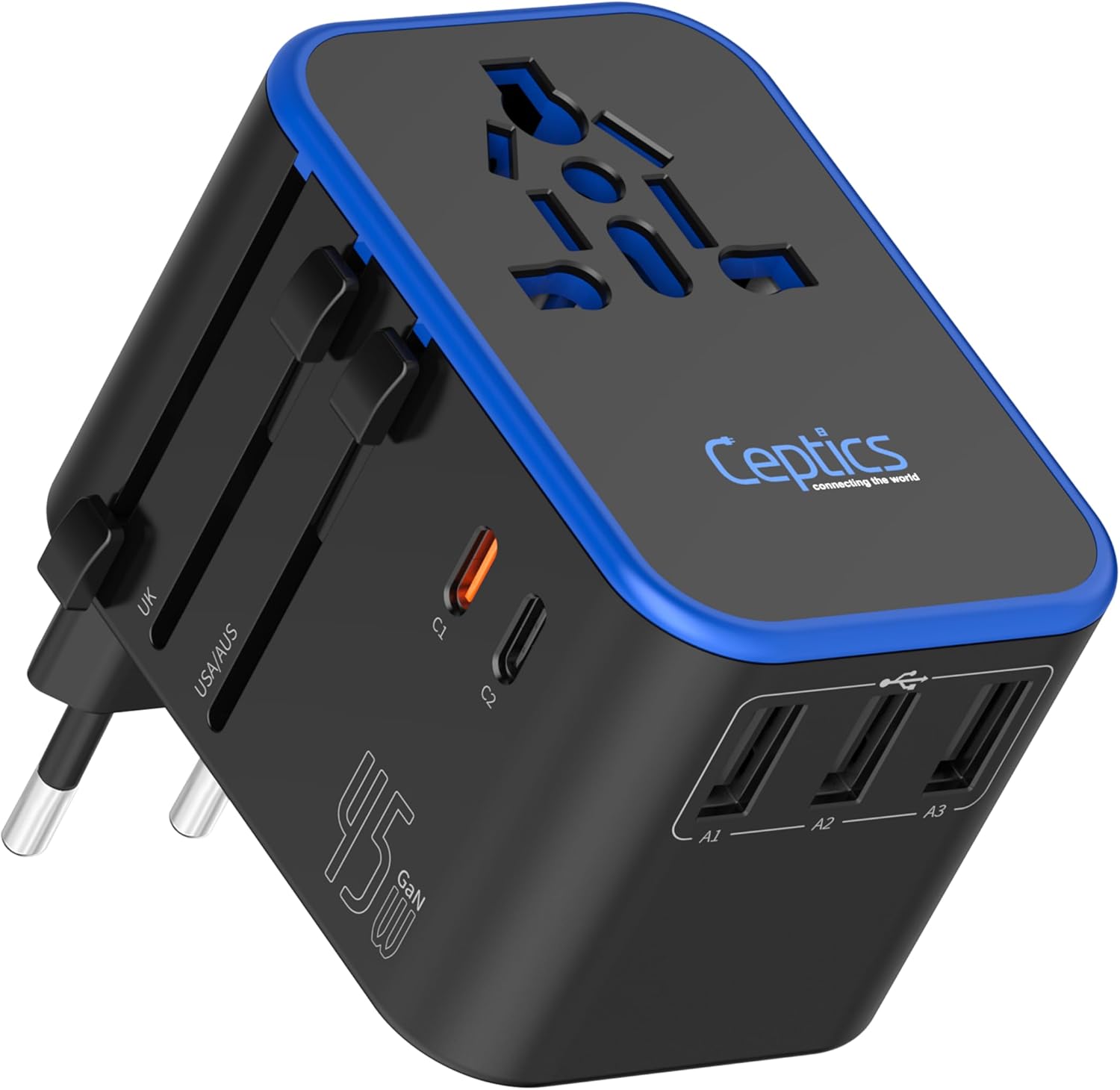
Ceptics 45W Universal Travel Adapter
A universal travel adapter with Type A, C, G and I plugs and five USB ports, according to the listing.

KEOFID Anti-Theft Travel Laptop Backpack
A water-resistant laptop backpack with hidden compartments, a luggage strap and a USB charging port, according to the listing.
As an Amazon Associate we earn from qualifying purchases at no additional cost to you.
Frequently asked questions
Which countries are included in the Schengen Area? ▼
The Schengen area has 29 countries: 25 EU member states (every EU country except Ireland and Cyprus) plus Iceland, Liechtenstein, Norway and Switzerland. Bulgaria and Romania became full members on January 1, 2025. The UK, Ireland and Cyprus have their own entry rules and their days do not count towards your Schengen 90 days.
What happens if I overstay the 90 days? ▼
Overstaying is a violation of EU immigration law. Depending on the country and the length of the overstay, penalties can include immediate deportation, heavy fines, and a multi-year ban from re-entering the entire Schengen zone. Since the Entry/Exit System became fully operational in April 2026, overstays are detected automatically.
Does the 180-day period start from my first entry? ▼
No, this is a common misconception. There is no “first entry” reset. The rule applies to “any” 180-day period. To check your status for today, simply look backwards exactly 180 days from today and count how many days you have been inside the zone.
I have used 80 days. When can I come back for more time? ▼
Move the assessment date forward day by day. Each day, the oldest day in the 180-day window falls out of the count, so you regain one day of allowance for every day that old stay slides out. For instance, if your earliest counted stay began on March 10, that day stops counting on September 6. Planning a re-entry for a date when the calculator shows the number of days you need is safer than guessing, and keeping a buffer of a few days protects you against errors on the border control side.